

Description
Concentrated Sulphuric Acid: Properties and Uses
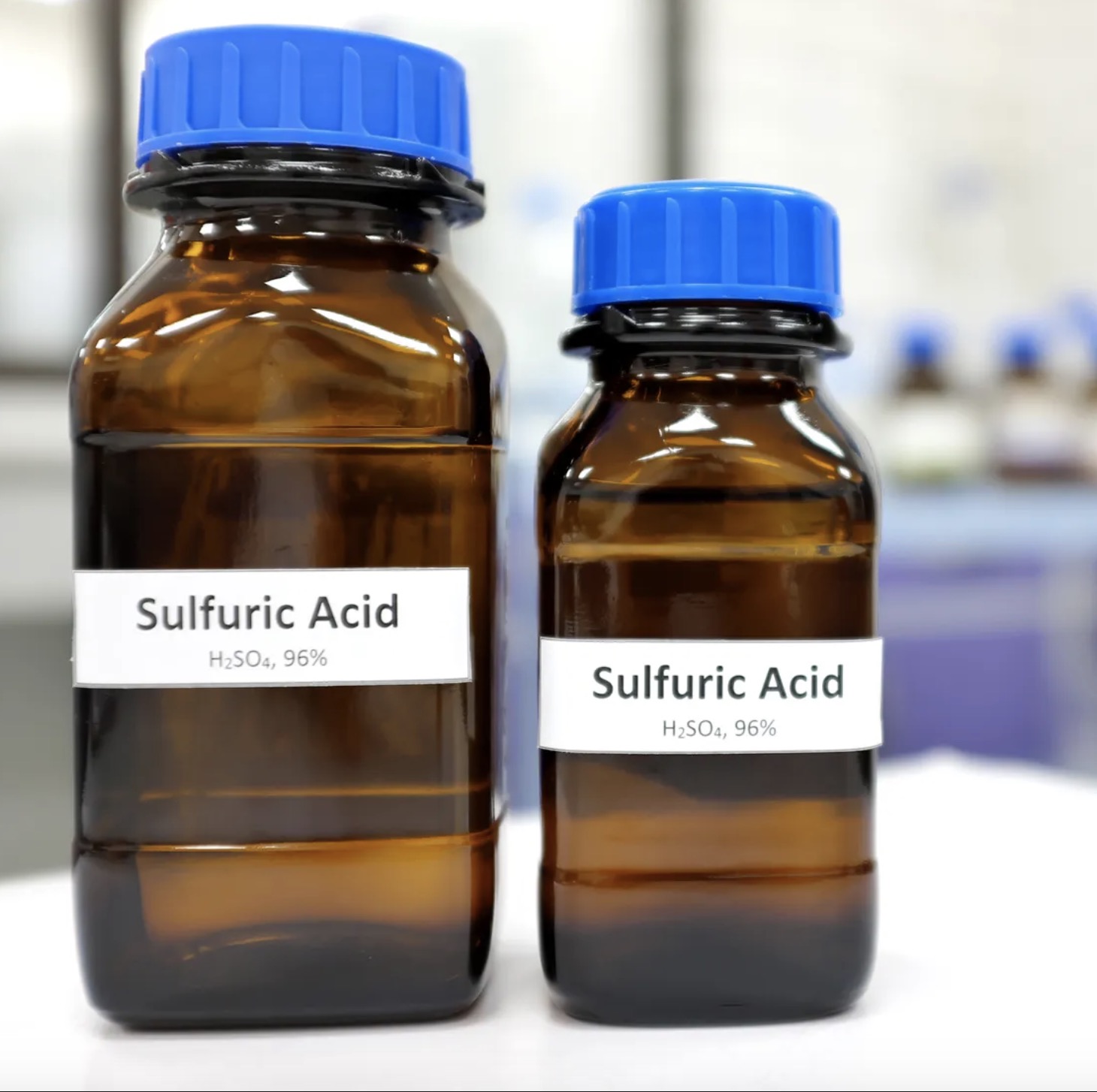
Concentrated Sulphuric Acid; 𝐻2𝑆𝑂4) is one of the most widely produced and crucial industrial chemicals globally, often referred to as the “king of chemicals”. It is a dense, colorless, oily, and highly corrosive liquid. With a concentration typically around 98.3%, it acts as a powerful dehydrating agent, oxidizing agent, and catalyst in numerous industrial applications.
What is Concentrated Sulphuric Acid?
Concentrated sulphuric acid is an inorganic acid with a molecular mass of 98.1 g/mol, characterized by its high viscosity and ability to absorb water (hygroscopic). It is highly reactive with water, releasing significant heat during dilution.
Key Chemical Properties
- Appearance: Colorless, oily liquid (pure), may appear brownish if impure.
- Formula:
H2SO4
𝐻2𝑆𝑂4
- Density: Approx. 1.84 g/cm³ at 20°C.
- Boiling Point: Decomposes at 340°C.
- Solubility: Misible with water, causing an extremely exothermic reaction.

Industrial and Chemical Uses
Due to its intense dehydrating and oxidizing properties, concentrated sulphuric acid is indispensable in several sectors:
- Fertilizer Production: The largest use (up to 50%) is in the production of phosphoric acid, which is then used to make phosphate fertilizers.
- Chemical Manufacturing: It is vital for producing other acids (hydrochloric and hydrofluoric), dyes, glues, explosives, plastics, and pigments.
- Petroleum Refining: Used in the purification of petroleum to produce gasoline and diesel.
- Metal Processing: Employed in pickling and cleaning iron/steel and in copper smelting.
- Automobile Batteries: Used as the electrolyte in lead-acid batteries.
- Dehydrating Agent: Used in chemical reactions that require water removal, such as in the manufacturing of nylon.
Safety and Handling Precautions
Handling concentrated sulphuric acid requires strict adherence to safety protocols, as it causes rapid tissue destruction, serious chemical burns, and permanent eye damage or blindness.
- Extreme Corrosion: It will char wood and most organic materials upon contact.
- Reaction with Water: NEVER add water to concentrated acid. Always add the acid slowly to water to prevent explosive spattering.
- Incompatible Materials: Keep away from bases, organic materials, combustible substances, and metals (which produce flammable hydrogen gas).
- PPE Requirements: Wear chemical splash goggles, face shields, acid-resistant gloves, boots, and aprons.
- Ventilation: Use only in well-ventilated areas to avoid inhaling acid fumes/mist, which can cause pulmonary edema.
First Aid Measures for Exposure
- Skin Contact: Immediately flush with lukewarm water for at least 30 minutes. Remove contaminated clothing.
- Eye Contact: Flush eyes with water immediately for at least 30 minutes, keeping eyelids open. Seek immediate medical attention.
- Inhalation: Move to fresh air. If breathing is difficult, seek immediate medical aid.



Reviews
There are no reviews yet.